Nava Bharat Ventures Company Profile – Chart Analysis

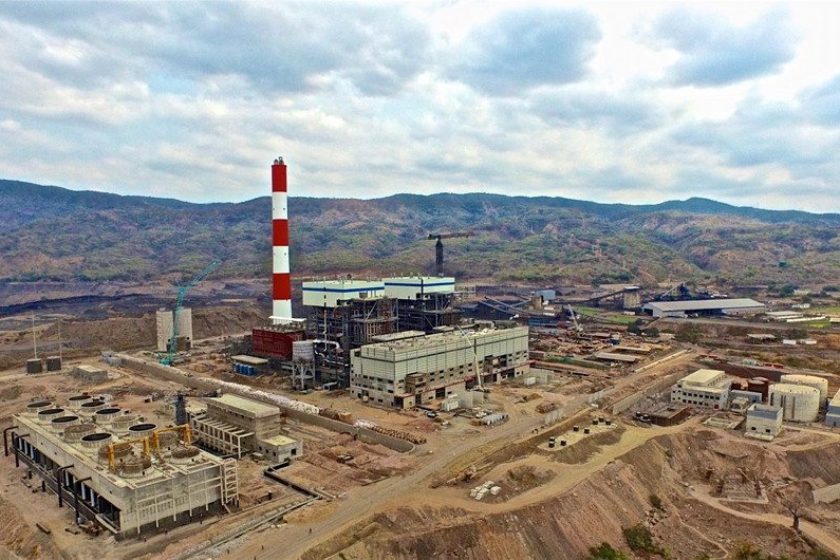
Nava Bharat Ventures Limited is an India-based company, which is engaged in the business of power generation, mining, ferro alloys and agri-business. The Company’s segments include Ferro Alloys, Power and Sugar. The Company operates in geographies regions across India, South-East Asia and Africa. The Company’s domestic operations include power, ferro alloys and sugar. The Company’s power plants in Andhra Pradesh, Telangana and Odisha have a total installed capacity of approximately 440 megawatt.

The Company manufactures Manganese Alloys and Chromium Alloys with a production capacity of approximately 200,000 tons per annum. The Company’s sugar plant, distillery, ethanol plant and co-gen plant is located in Samalkot, Andhra Pradesh. The Company’s international operations include power, mining and agri-business. In Zambia, the Company is engaged in the commercial production of coal and has around two units of 150 megawatt power plant under construction.

Nava Bharat Ventures reported a 32% drop in net profit to Rs. 29.2 Cr in Q1, as against Rs. 43 Cr in the same period last year. The Income from Operations went down by 9.3% to Rs. 313.7 Cr, from Rs. 346 Cr previously. Shares tanked by 6% during the day’s trade.

Balance all updates about the stock will be given under this post in the comments form. So, do remember to read the comments below.


Source: Indian Share Tips

Chibuluma Mines allocates $4.4m to rehab programme

CHIBULUMA Mines Plc says the company has allocated US$ 4.4 million under the rehabilitation programme aimed at restoring the landscape to its original state after the projected closure of the mines in 2022.

Although, the mines accounts for less than two percent (13, 300 tonnes of copper in 2015 out of the country’s output of 711, 000 tonnes of annual Copper production), Chibuluma Mine, is one of Zambia’s most successful mines in safety, productivity and profitability.

The company has had only one fatality in eight years, and it has paid corporate tax every year since 2007, with a total of US$ 112 million paid to date, according to the latest Mining for Zambia report.

Chibuluma Mines head of finance Eustus Munsaka said the biggest challenge is that the current mineral deposit will be mined out within the next few years.

“Unless our ongoing exploration finds a new copper deposit worth exploiting soon, Chibuluma will probably close sometime between 2020 and 2022. All mines have a natural lifespan, and we are about to reach the end of ours,” he said.

He said the company has a multi-million rehabilitation programme that is under way to restore the landscape to its original state.
“Some 33, 000 trees have been planted, carpet grass has been laid, and firebreaks have been built.

“Once the mine stops operating, various structures and buildings will be demolished, roads will be scraped, more land will be replanted with vegetation, and any contaminated land will be neutralised with lime. The entrance to the mine will be sealed to reduce the risk of acid mine drainage,” he said.

After closure, the shareholder Metorex and its parent company Jinchuan will shift their focus to the larger copper-mining investments in the neighbouring Democratic Republic of the Congo.

He said even though closure is still a few years off, Chibuluma has developed a good track record in its contribution to Zambia since it was privatised in 1998.

“The mine has paid taxes to Government, uplifted the community through its corporate social responsibility programme, and stimulated the local economy and job creation through the spending power of its employees,” Mr Munsaka said.

And Chibuluma Mine chief geologist Narendra Shekhawat said small quantities of silver are recovered as a by-product during the copper smelting process and it amounts to about US$16,000 a month.


Source: Daily Mail

Maamba Collieries says it can generate 600MW if tarrifs are increased

MAAMBA Collieries Limited is ready to double its thermal-generated power at the newly-commissioned plant to 600 megawatts (MW) once tariffs are increased to reflect actual cost of producing electricity.

Currently, the Maamba coal-fired power plant has an installed capacity of 300MW but only 150MW was commissioned last week and connected to the national grid through Zesco Limited, which signed a memorandum of understanding with the company to start supplying electricity to the latter.

Zambian electricity tarrifs are said to be the lowest in the region and cost below US$0.6 cents per kilowatt hour for domestic consumers while the regional average is between US$10 and 20 cents.

Maamba Collieries Limited chairman Ashok Devineni said the company is ready to increase the generation capacity of the thermal power plant from the current 300MW to 600MW if tariffs are increased to reflect actual cost of electricity.

The coal-fired power plant was commissioned last week with 150MW connected to the national grid while the other 150MW will be connected this month-end and it is expected to help reduce the power cuts, which have affected the country recently.

Mr Devineni said the planned increase in electricity generation has to happen to keep pace with the growing demand in the country.

“Maamba can contribute by expanding the capacity of the power plant by an additional 300MW to ensure a total of 600MW if Zesco can guarantee the off-take. Our expansion will be time, cost and resource efficient. It can be set up in 24 months.

“We must, however, acknowledge the fact that creating new generation capacity will be an uphill task unless and until the electricity tariffs are revised to reflect the true cost of procurement for Zesco. Actually, sustaining the present 300MW generation will itself be difficult, given the present miss-match of tariff and cost of supply,” he said.

The plant, whose investment is US$738 million, will help diversify the power generation sources in the country, which is heavily dependent on hydro power, thereby insulating Zambia from energy shortage during the years of low rainfall.

And Zesco Limited managing director Victor Mundende said there is need to migrate and start charging cost-reflective tariffs.

“Once we have cost-reflective tariffs in place, Maamba or any other independent power producer can sell anywhere while Zesco can help by providing its transmission network,” he said.


Source: Lusaka Times

Maamba Collieries plans to increase power

MAAMBA Collieries Limited is ready to double its thermal-generated power at the newly-commissioned plant to 600 megawatts (MW) once tariffs are increased to reflect actual cost of producing electricity.

Currently, the Maamba coal-fired power plant has an installed capacity of 300MW but only 150MW was commissioned last week and connected to the national grid through Zesco Limited, which signed a memorandum of understanding with the company to start supplying electricity to the latter.

Zambian electricity tarrifs are said to be the lowest in the region and cost below US$0.6 cents per kilowatt hour for domestic consumers while the regional average is between US$10 and 20 cents.

Maamba Collieries Limited chairman Ashok Devineni said the company is ready to increase the generation capacity of the thermal power plant from the current 300MW to 600MW if tariffs are increased to reflect actual cost of electricity.

The coal-fired power plant was commissioned last week with 150MW connected to the national grid while the other 150MW will be connected this month-end and it is expected to help reduce the power cuts, which have affected the country recently.

Mr Devineni said the planned increase in electricity generation has to happen to keep pace with the growing demand in the country.
“Maamba can contribute by expanding the capacity of the power plant by an additional 300MW to ensure a total of 600MW if Zesco can guarantee the off-take. Our expansion will be time, cost and resource efficient. It can be set up in 24 months.

“We must, however, acknowledge the fact that creating new generation capacity will be an uphill task unless and until the electricity tariffs are revised to reflect the true cost of procurement for Zesco. Actually, sustaining the present 300MW generation will itself be difficult, given the present miss-match of tariff and cost of supply,” he said.

The plant, whose investment is US$738 million, will help diversify the power generation sources in the country, which is heavily dependent on hydro power, thereby insulating Zambia from energy shortage during the years of low rainfall.

And Zesco Limited managing director Victor Mundende said there is need to migrate and start charging cost-reflective tariffs.

“Once we have cost-reflective tariffs in place, Maamba or any other independent power producer can sell anywhere while Zesco can help by providing its transmission network,” he said.


Source: Daily Mail

Maamba commissioning to end load shedding

THE commissioning of 150 megawatts of the 300MW coal-fired power plant at Maamba Collieries Limited is a milestone in the country’s diversification of energy production.

Like President Lungu said during the commissioning of the 150 megawatts yesterday, Zambia is on course to becoming a net exporter of electricity and energy-related products.

We are delighted that commissioning of the plant in Sinazongwe district represents the diversification of the country’s mix which now includes solar, wind, thermal, coal and many others.

Zambia had for a long time depended heavily on hydro energy but the dry spell in the last few years, especially during the 2014- 2015 rainy season, has taught the country lessons in electricity diversification.

The dry spell had a devastating impact on hydro power. The reduction on water levels in our reservoir translated into reduced energy use because power plants operate for fewer hours.

That is why President Lungu said yesterday that the country’s dependence on hydro-power has consequences when we experience low rains, which has justified the diversification towards other forms of energy.

However, diversification should be attractive to the private sector to make their business profitable.

President Lungu hinted yesterday at Government considering cost-effective tariffs in the power sector.

Zambia has the lowest tariffs in the Southern African Development Community and should the status quo continue, the country will continue experiencing power deficits as power developers will continue to shun the country.

So far, Zambia is on course towards power diversification going by the various efforts being made by the government which has provided a conducive environment, as well as its partners and the private sector.

The Industrial Development Corporation (IDC) is in the process of developing at least 600 MW of solar power to help mitigate the country’s electricity shortage.

This is part of Government’s determination to finding a lasting solution to the power crisis.

The International Finance Corporation (IFC) of the World Bank and IDC Zambia have signed a memorandum of understanding to explore the development of two independent 50MW solar power projects in Zambia through the scaling solar programme.

Zambia Sugar Plc, on the other hand, is pondering expanding thermal power generation capacity from the current 30MW to 50MW.

This is in response to the current power reduction on the national electricity grid caused by low water levels in major hydro stations in Zambia.

The sugar company currently produces 30MW of electricity from sugar factory residues.

Through interventions such as Maamba Collieries, the IDC and Ndola Energy Company Limited, which intends to expand its power generation capacity to over 100MW, Zambia is indeed on course to reducing its dependence on hydro energy.

Credit should go to the Patriotic Front government and President Lungu in particular for ensuring that the country diversifies its sources of power.

Power drives the main economic sectors and it is gratifying that the mining, agricultural and manufacturing sectors will now be supplied with the power they need.

That will undoubtedly increase production, which will in turn improve the country’s forex earning and ultimately spur economic development.

The rationing of power has now been effectively ended.

Source: Zambia Daily Mail

Glencore lifts suspension of output at Zambia copper mine- trade union

Lusaka – Glencore’s Zambian Mopani Copper Mines unit has lifted its suspension of production at an underground mine that followed the death of three miners in an accident, a labour union official said on Saturday.

“The suspension of output across all Mopani Copper Mines operations was lifted at midnight after all employees involved in production were briefed on the importance of following safety rules,” the official from the Mine Workers’ Union of Zambia told Reuters. He declined to be named.

Reuters

Source: News 24 Zambia

KCM supports growth for manufacturers of leather products

KONKOLA Copper Mines (KCM) has announced the signing of a Memorandum of Understanding (MoU) with the Copperbelt Leather Industry Cluster to establish the Leather Sector Cottage Industry Clustering and Incubation Project.

The company says the objective of the assistance to the leather association is to facilitate the creation and development of viable cottage industries in the Leather Sector. About 200 Small and Medium Scale Enterprises (SMEs) will also receive training for making leather products like safety shoes and gloves for the mining industry when they build necessary capacity in the future.

The project will target shoe cobblers, shoe makers and the youth who will primarily be identified from the communities where KCM operates.

Commenting on the project, KCM Manager Community Relations Brian Siatubi said: “the signing of the MoU is a significant step in KCM’s plans to help improve the lives of Zambians through economic diversification. The project will contribute to employment generation which is critical to support sustainable livelihoods in the communities.”

Mr Siatubi said KCM would provide the initial capital requirement of one hundred and twenty one thousand kwacha (K121, 000.00) to procure leather-making equipment and machinery required by the Copperbelt Leather Industry Cluster project.

“Our long-term goal is to support the growth of the leather industry so that SMEs can be supplying leather products like safety boots and gloves to the mining sector in the next few years. The support and growth of local industry fits into KCM and Vedanta Resources’ long-term vision to continue mining in Zambia for the next 50 years,” Mr Siatubi said.

Copperbelt Leather Industry Cluster Coordinator Preston Viswamo hailed KCM’s assistance as ‘a major milestone’ in pursuit of the growth of his association.

Commenting on the signing of the MoU, Mr Viswamo said: “it is a milestone because this partnership with KCM will strengthen us in terms of delivering services to the SMEs in the leather sector. The relationship with KCM is going to advance our operations and enable us to grow, especially our members in Chingola. It will allow us to create market linkages for the Chingola cluster with the main one in Kitwe.”

Source: Mwebantu

FQM’s Sentinel leading future copper mining ventures in Zambia

First Quantum Minerals’ new $2.1-billion Sentinel mine in Zambia is the one of the most-ambitious ventures for the country’s mining industry.

This is according to the Zambia Chamber of Mines which states that the Sentinel mine is the single-largest upfront infrastructure investment in Zambia since the Kariba dam.

And by virtue of its technological sophistication; it is a blueprint for the future of mining in Zambia because it shows that it can be economically viable to mine a low-grade copper deposit.

Sentinel mine is located in the town it gave birth to – Kalumbila – and for this reason is often referred to as Kalumbila mine.

The Sentinel mine started operating in September 2015, and is currently producing around 150 000 tpa of copper. It expects to reach full production of up to 300 000 t in 2017; of both concentrate and plated copper.

Owned by First Quantum Minerals (FQM), the mine took five years to build where thousands of contractors were employed and more than 265 000 t of equipment was transported to the site, in 14 500 massive truckloads.

There was no existing power grid, so more than 600 km of power lines had to be constructed, running halfway across the country down to the west of Lusaka.

However, instead of burning the timber, FQM built a sawmill which employs 120 people and uses the wood to make fence poles, furniture and other wood products.

The Sentinel project consumed prodigious quantities of cement, fuel and food; launched many local businesses large and small; created employment and kick-started the creation of an entire local economy where none previously existed.

“Sentinel mine puts Zambia at the forefront of global mining technology,” says John Dean, commercial manager.

“It sets new standards in efficiency, productivity and training, and sets a precedent for future copper-mining ventures in Zambia,” says Dean.

Sentinel mine’s technology

Sentinel mine is a low-grade, open-pit mine – the ore contains only 0.51% of copper.

Yet the mine is anticipated to produce a long-term return on investment because it has been designed from scratch, carries no legacy issues, and uses the most sophisticated mining technology in the world.

Everything is advanced: the big drill rigs allow explosives to be placed at greater depths, the trucks are gigantic, and carry heavier loads. The steel-ball mills are the world’s largest and grind larger quantities of ore.

In addition, the conveyor belts are long and carry more material further, the world’s largest semi-mobile rope shovels scoop out 120 t of ore at a time from the pit and can fill a 250 t truck in under a minute.

“It’s all about speed, efficiency and economies of scale,” says Dean. “The mine would not be viable without this level of technology.”

The technology is expensive – and dangerous – and proper training is required.

For example, the drivers of the heavy haul trucks learn their craft in sophisticated equipment in state-of-the-art simulators which use virtual reality to replicate real-world conditions.

In one simulator session, a driver is learning to drive in heavy rain and muddy terrain.

As the rain beats down on the windscreen and the truck struggles up a hill, the system faithfully records the driver’s movements, offers advice via screen prompts and records his score.

In a room alongside, the rest of the team watch the session in real time on a bank of computer screens.

All drivers have to do simulator training every two years as a refresher course, if they’ve been away from work for more than a month, or if their daily driving reports show too many errors.

“Sentinel is not just about sophisticated technology,” says Dean. “It’s also about operations, maintenance, working practices, employee productivity – and having access to affordable and reliable energy,” he adds.

Energy is an emotive issue at Sentinel. Despite having built nearly 600 km of powerlines, Sentinel has yet to be fully connected to the national grid by electricity supplier Zesco.

The mine is currently running on reduced supply, and needs about 30% more energy to operate at full capacity – especially as most of its sophisticated machinery and equipment uses electric power rather than diesel fuel.

Nevertheless, even at current production levels, Sentinel’s contribution to national output confirms North-Western province’s reputation as the country’s largest copper-producing region.

Its three mines – FQM Sentinel, FQM Kansanshi and Barrick Lumwana – together produce nearly 500 000 tpa of copper, which is about 70% of Zambia’s annual production of 711 000 t.

“Fifteen years ago, there was no mining industry to speak of in North-Western province,” says Dean.

“Today, several billion dollars of investment later, that has changed completely. The province has become the new Copperbelt. Sentinel is the most recent example of that shift,” he concludes.

Source: Mining Review Africa

First Quantum sets new quarterly records for production, sales

JOHANNESBURG (miningweekly.com) – Canadian base metals producer First Quantum Minerals (FQM) set a new quarterly record for copper production and sales of 131 349 t and 132 030 t, respectively, in the three months to June 30, surpassing previous records set in the first quarter of this year.

The company’s Sentinel copper mine, in Zambia, recorded a 53% production increase quarter-on-quarter, which FQM attributed to “steady operational and power supply improvements”.

FQM also recorded its highest quarterly production since the third quarter of 2014 at its 80%-owned Kansanshi Mining’s eponymous copper mine, owing to increased smelter availability and sulphuric acid supply from the mine’s smelter operation.

Meanwhile, the company’s higher sales volume quarter-on-quarter was mostly due to increased production at Sentinel.

The company announced comparative earnings of $38-million and cash flows from continuing operating activities of $304-million for the three months.

Further, FQM has completed two main initiatives in its strategy to survive volatile market conditions and sustained lower commodity prices. Firstly, the company put in place a new $1.82-billion debt facility equally comprising a term loan and a revolving credit facility. This new facility, which has improved the company’s financial covenants and amortisation schedule, matures in December 2019 and replaces the previous $3-billion facility.

Secondly, FQM completed the sale of Kevitsa nickel mine, in Finland, to Swedish mining company Boliden for $712-million in cash, plus restricted cash and working capital adjustments, of which $663-million was received in June this year. The remaining amount is due to be received in the current quarter.

FQM chairperson and CEO Philip Pascall noted that the company would maintain its “strong performance” as its focus on these priorities paid off.

He added that all of the company’s operations had shown cost and efficiency improvements, though he acknowledged that the Kansanshi smelter’s operation had the greatest impact on the company’s performance.

This was because the Kansanshi smelter provided additional acid at very little cost. “The extra acid helps recovery of mixed and high acid-consuming oxide ores. The combination of higher recoveries, negligible acid cost and the lower smelting treatment costs make a significant difference,” Pascall explained.

He also noted that the successful sale of Kevitsa and senior debt facility refinancing further strengthened the company’s financial position, “hence its ability to continue developing the Cobre Panama copper project, in Panama, amid volatile market conditions and sustained lower commodity prices”.

“Going forward, we are making progress with the complex process of arranging project financing for Cobre Panama. We will continue to be alert to any opportunities for further cost savings and improvements in profitability and cash flow,” Pascall concluded.

Source: Mining Weekly

Richard Chembe quits post as Investrust boss on poor health grounds

Investrust Bank Plc Managing Director Richard Chembe has left his post owing to poor health.

According to a brief statement issued by the Lusaka Stock Exchange, he Board of Directors of Investrust Bank PLC notified the market that Dr. Chembe retired on medical grounds on 22nd July 2016 in line with the provisions of the Employment Act Cap 268 of the Laws of Zambia.

“The Board wishes to further notify the market that Mr. Isaiah Chindumba will continue to act in the role of Managing Director until further notice. The Board would like to thank Dr. Chembe for leading the only indigenous Bank through its restructuring process leading to its current focus of sustaining the growth of its retail brand.

Dr Chembe who also served as State House Economic Adviser during the reign of late President Rupiah Banda has been on medical leave since he ruptured his vein last December.

Source: Lusaka Times