Sanitise Gold Mining for Maximum Revenue

MINING has for over five decades been the mainstay of the country’s economy and has been the goose which has laid the golden eggs.
It has provided employment – direct and indirect – to thousands of Zambians and expatriates, as well as being the net foreign exchange earner.
Copper and other metals such as cobalt, lead, nickel and zinc have kept the economic wheels running as they are some of the most essential elements with strategic and irreplaceable industrial uses world over.
But the resumption of mining activities in North-Western Province, starting with Kansanshi in Solwezi and Lumwana in Kalumbila district, has added another dimension following the discovery of gold.
This has meant that Zambia’s mining portfolio has value addition, what with emeralds which are mined in Lufwanyama district on the Copperbelt.
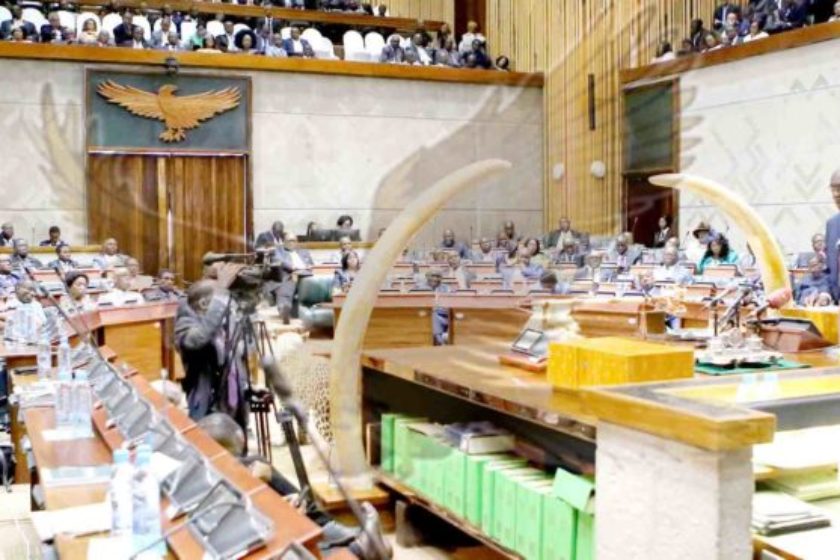
Last week, Vice-President Inonge Wina told Parliament that more than 24,000 kilogrammes of gold was produced by four mining companies in Zambia from 2017 to February 2019.
Mrs Wina, however, said it was difficult to be exact about the figure due to rampant illegal mining of gold taking place all over the country.
Under-declaration of the actual production figures of gold by some mines cannot also be ruled out as there is no independent verification of the same.
While gold mined at Kansanshi, Lumwana and other mines is said to be aligned to copper, the discovery of pure gold at Kasenseli in Mwinilunga district of North-Western Province should make the difference.
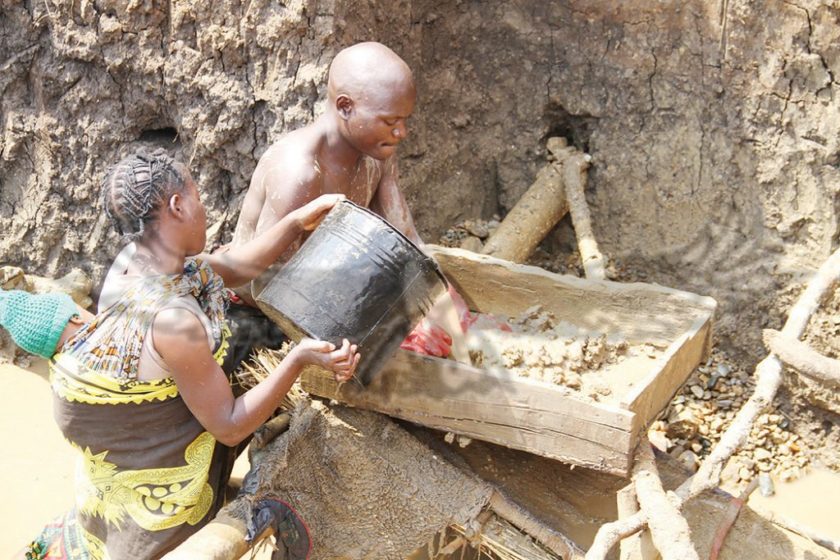
There has been illegal mining at Kasenseli since the gold was discovered. The gold rush has unfortunately led to loss of lives.
It is public knowledge that charter planes have been landing in North-Western Province taking out gold (and suspected diamonds) that has been clandestinely mined.
Government cannot watch illegality to continue at Kasenseli and has since suspended all mining activities where about 2,000 illegal miners reportedly dig gold at the premises during the night.
The suspension of mining activities at Kasenseli Gold Mine has been made in public interest to bring order in Mwinilunga and security wings will be manning the facility.
Minister of Mines and Mineral Development Richard Musukwa said on Saturday that Cabinet resolved to suspend the mining activities at the facility to put in place a robust mining exploration programme.
It is also alleged that foreigners have camped in Mwinilunga to conduct illegal mining at Kasenseli.
The Zambia Consolidated Copper Mines–Investment Holding (ZCCM-IH), in partnership with the community in Mwinilunga, will oversee operations at the mine.
It has become inevitable for the State, through ZCCM-IH, to normalise gold production at Kasenseli for the benefit of all the stakeholders.
It is a pity that ZCCM-IH has been very slow to possess the mine and find partners to start production.
The country is in a hurry to develop and needs all the sales of its minerals to enhance foreign exchange earnings.
Gold is one of the best-selling minerals on the world market.
The successful production of gold will change the fortunes of Mwinilunga, which has for a long time relied on pineapples.
It also confirms the status of North-Western as the new copper belt region of the country.
Government will ensure that the gold endowment of Kasenseli is felt by all citizens in Mwinilunga and beyond as the revenue from exports will go towards social sectors such as health, education and cash transfer.
Going forward, ZCCM-IH should be proactive by being on top of things as opposed to waiting for illegal miners to discover minerals.
This country has trained and is still training geologists to ensure that all mineral-rich areas are zoned and protected.

source: www.daily-mail.co.zm/sanitise-gold-mining-for-maximum-revenue/

Barnaby Mulenga to be unveiled at the next ZCCM IH AGM

FinanceZCCM-Investment Holdings Plc
Written by 

The appointment of Barnaby Mulenga will be announced and his position on the Board of ZCCM IH Group ratified by shareholders when the group of companies hosts its next annual general meeting in mid-January 2020, according to a statement from the Group.

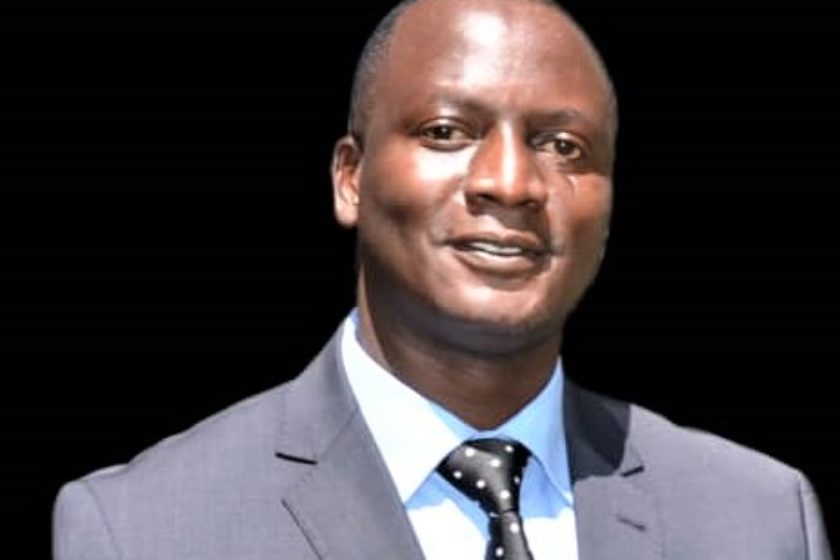
Barnaby Mulenga, Incoming Board Member 

Barnaby, who is a Master’s degree holder in Environmental Law from the University of Sydney Australia, is currently the Permanent Secretary at the Ministry of Mines after being transferred from Ministry of Labour and Social Security in September 2019. Prior to that, he held the positions of Commissioner of Lands and Head of Estates and valuation all under the Ministry of Lands.

His appointment to the Eric Silwamba led board comes at a time when the group is seeking to create value outside traditional investments. Dividends out of investee companies that have largely been in the mining sector. In 2019 alone, CEO Mabvuto Chipata’s ZCCM-IH and Urban Hotel Group partnered to invest K60 million in the construction of a mixed-development property in Lusaka. Barnaby will be looking closely at this particular investment as the group seeks to expand on its property portfolio.

At the moment, Barnaby is also the interim Chairman of the Public Service Pensions Fund (PSPF) Board. He also serves on a number of other Boards that include the National Pension Scheme Authority (NAPSA), Workers Compensation Control Fund Board (WCFCB), Zambia Development Agency (ZDA) and the Pensions and Insurance Authority (PIA) among others.

His appointment to the board is a strategic one as his background will aid the board in achieving one of the 5 strategic focus areas. Real estate remains a priority for the investment holding group and Barnaby will provide insight from his experience at the Ministry of Lands.

ZCCM IH Proposes 33 Ngwee Dividend for 2019

FinanceZCCM-Investment Holdings Plc
Written by 

When the ZCCM IH board meets with shareholders next month, they will be presenting a K0.33 per share dividend to shareholders which will bring the 2019 declared dividend for class A and B shareholders to approximately K53 million.

Board Chairperson, Eric Silwamba and his CEO Mabvuto Chipata face shareholders in the new year (January 16, 2020) on a back of busy year that saw the duo provide strategic leadership with the commencement of their 2018 to 2023 strategic plan which the group of companies believes will create a sustainable business model that is not solely dependent on investee company dividends.

Earlier in December 2019, ZCCM IH had advised Shareholders of the Company that the Earnings Per Share (“EPS”) for the Group and Company financial year ended 31 March 2019 is expected to be approximately 47% and 125% respectively, lower than the financial year ended 31 March 2018. The final audited results showed the group suffered a haircut in EPS from K5.25 to K2.79, on a year on year basis.

At company level, ZCCM IH suffered a loss for the year of K108 (2018: Profit K433 million), mainly due to a reduction in other income, impairment losses and fair value loss amounting to a total of K1.069 billion, according to the SENS announcement published on their website.

However, the duo will be proud of the performance of Kansanshi Mining Plc and Maamba Collieries Limited whose combined share of profit accounted for 84% of the recorded amount for the year. “There was an increase in share of profit from equity accounted investee companies to K689 million from K973 million”.

Financial Insight believes that focus of the next AGM will center on CEO Mabvuto Chipata preaching the strategic plan gospel to shareholders as he leads them towards sustainable growth away from and reducing on the dependence on dividend income streams which historically have been unstable and inconsistent.

Source: Financial Insight

ZCCM IH 16th Annual General Meeting

Finance, ZCCM-Investment Holdings Plc
Posted on December 20, 2019 at 5:24 am.
Written by Loisa Mbatha Kakoma

NOTICE IS HEREBY given that the Sixteenth Annual General Meeting of members of ZCCM Investments Holdings Plc will be held on Tuesday, 14 January 2020 at 10:00 hours at Southern Sun Ridgeway Hotel, corner of Church Road and Independence Avenue, Lusaka, Zambia to transact the following business:

1. To consider and adopt the Minutes of the 15th Annual General Meeting held on 28 January 2019.

2. To receive and adopt the audited Financial Statements for the year ended 31 March 2019, together with the Reports of the Directors and the Auditors.

3. To approve the final dividend of K0.33 per share recommended by the Directors.

4. To consider and adopt the recommendation to appoint External Auditors for the year ended 31 December 2019, and to authorise the Directors to fix their remuneration.

5. To confirm the appointment of: Mr Barnaby B Mulenga as Non-Executive Director on the ZCCM-IH Board.

6. To transact such other business as may properly be transacted at an Annual General Meeting.

A member entitled to attend and vote at the meeting is entitled to appoint one or more proxies to attend and, on a poll, to vote in his/her stead. The proxy need not be a member of the Company. A proxy form is enclosed and must be deposited at the office of the Company Secretary not less than 48 hours before the time appointed for holding the meeting for those members who wish to be represented at the meeting.

AGM Proxy Form
The proxy form must be deposited at the office of the Company Secretary not less than 48 hours before the time appointed for holding the meeting.

By Order of the Board
Chabby Chabala
Company Secretary

Source: Financial Insight

What to Look Out for in the ZCCM-IH 2019 Annual Report When its ublished

FinanceZCCM-Investment Holdings Plc

Written by 

When ZCCM IH announced that it forecast that the Earnings Per Share (“EPS”) for the Group and Company financial year ended 31 March 2019 were expected to be approximately 47% and 125% respectively, lower than the financial year ended 31 March 2018, Financial Insight predicted that Investors in the company would be keen to know which investments were likely to be the cause in the erosion in value.

Although the latest SENS announcement published on 13th December 2019 advises shareholders that investee company’s underperformance by way of impairment, it does not mention which companies these are.

CEO Mabvuto Chipata

If an investor were to follow the bread crumbs, the obvious place to start would be the 2018 annual report which was released at the Annual General Meeting in January 2019 by the former CEO Dr. Pius Kasolo who was subsequently replaced by the Chief Investment Officer Mabvuto Chipata.

Mr. Chipata, who was then responsible for all the 17 investee companies knows that the group has struggled to prop up Ndola Lime’s performance. According to the 2018 annual report, the Ndola Lime LC investment reported total revenues for the financial year ended 31st March 2018 of K60.1 million and realized a loss after tax of K190 million. The reason for this weak performance was below budget sales figures, huge financial costs and penalties on overdue statutory obligations.

Furthermore, the plant suffered a major setback which Mr. Chipata lamented about when he spoke to the founder of Financial Insight in January 2019 in an exclusive interview when he was asked regarding the 21st September 2017 Vertical Kiln 2 (VK2) incident where it was engulfed in flames. This particular incident damaged several components of the kiln, rendering it dysfunctional. The setback was immense considering VK1 had just undergone refurbishments to its refractory bricks but could not be fired up due to NLC’s lack of working capital which inevitability led to the grounding of production.

Another struggling asset is the Investrust Bank Plc investment. The last annual report indicated that the Bank had recorded a 19.9% decrease in net interest income to K48.91 million during the year ended 31st December 2017 compared to K40.82 million in 2016. Hereafter ZCCM-IH increased its shareholding in Investrust from 45.4% to 71.4% through mandatory offer that commenced on 9th April 2018 and closed on 30th April 2018. With a commanding position in the boardroom, the 2019 performance will be interesting to see when ZCCM IH announces the investee companies’ individual performance.

A glitzy investment that will have investors pondering over is the Kariba Minerals Limited investment who reported back to back net losses for 2018 and 2017 of K17.18 million and K20.64 million respectively. Investors will remember that in February 2018 in Jaipur, India, KML held an auction at which a total of 3.35 tonnes of high-grade amethyst valued at US$270,000 was sold. For this investment, the introduction of new grading levels at auctions appears to be a source of additional value creation as the appetite for varying grades of the rare gems increases.

Its investment in the energy sector will also be under scrutiny. ZCCM IH’s associate company, CEC Africa Investment’s Limited suffered a net loss for the year ended 31 December 2017 of K2,578.5 million and has liabilities that exceed total assets by K3.171.58 raising the issue of going concern. This underperformance has been largely attributed to the wrath of the Naira (macroeconomic environment) and electricity regulation still work in progress.

Chairman E Silwamba SC.

Insiders indicate that the Annual General Meeting for the investment company is scheduled for Q1 2020 which will give investors in the company an opportunity to probe the Eric Suwilanji Silwamba, SC led board.

Sharing is caring!

Source: Financial Insight

Illegal Gold Mining Makes it Hard to Quantify Production

Vice-President Inonge Wina says government still faces challenges in quantifying the exact amount of gold produced in Zambia due to huge numbers of illegal miners scattered across the country.

Responding to a question from Senga Hill PF member of parliament Kapembwa Simbao, who wanted to know how much gold would be mined in the country going forward, Vice-President Wina said gold quantities in the country were not yet known because of illegal mining engulfing the sector.

“Mr Speaker, there is a lot of gold mining going on in the country, but it has been undertaken by illegal miners, as we call them these days. There is a lot of artisan mining in areas in Eastern Province, like Vubwi, Petauke, and in Lunao Valley, in Mkushi and many other areas. So, government has taken interest in what is going on in the mining of gold and ZCCM-IH is taking stock to investigate the issue of gold mining in Zambia,” Vice-President Wina said.

“We know that in Mwinilunga (District), new deposits have been discovered and they are already some artisan miners there, but government has sent security defence forces to secure security of the mines. Mr Speaker, the quantities are not yet well known because of the illegal nature in which this industry has been tackled. But before long, government will come up with the actual figures of gold mines in Zambia in various sectors, including the mining companies.”

Earlier, in a question for oral answer, Mbala PF member of parliament Mwalimu Simfukwe asked Mines Minister Richard Musukwa whether there were any companies that were mining gold in Zambia.

In response, Vice-President Wina said four mining companies in the country were mining gold.

Vice-President Wina also revealed that gold production dropped from 16,283Kg in 2017 to 7,790Kg in 2018.

“The following companies where producing gold in Zambia as of February, 2019; Kansanshi mines gold alongside copper; Mopani Copper Mines produces slimes containing gold; Konkola Copper Mines produces slimes containing gold; Kalumbila produces copper anodes containing gold. Gold production in 2017 and 2018 was as follows: in 2017: 16,283Kg of gold, in 2018: 7,790Kg of gold. The gold was not refined at the time it was exported. There is no refinery for gold in Zambia,” she said.

She said it was difficult for government to ascertain what led to the reduction of gold production last year.

“Mr Speaker, in the mining industry, the gold comes as a by-product from copper so depending on the quantities, the traces of gold in the copper cathodes, it is very difficult to [know] why there was a reduction from 2017 to 2019. Again, we have no figures here of how much copper was mined during this period and how much of that copper contained gold deposits,” she said.

“Government has come up with figures for 2017 and 2018 for gold that was mined by the mining companies, which means that government is keeping a record of the gold that is produced by these companies and ZRA (Zambia Revenue Authority) is devising mechanisms to ensure that the mining companies are accountable for not only copper, but gold and cobalt (which) are by-products of copper so that reasonable tax is given to government.”

And Vice-President Wina said the Ministry of Mines was currently scrutinizing would-be investors interested in establishing gold mines.

“Currently, the Minister of Mines is receiving some investors interested in gold mining and the licenses are being scrutinized to identify the right investors. Gold mining in Zambia in various sites was started by Zambian artisan miners who did the mining on their own and now they’re being put into cooperatives that will eventually become companies to run these small mines. However, bigger conglomerates are applying to the Ministry of Mines to obtain licenses to go into gold mining. I cannot give a time-frame to when actual big companies will start mining gold,” said Vice-President Wina.

“Government has taken interest in using gold to secure our reserves. That is why government has directed ZCCM-IH to ensure that the gold that will be discovered or will be produced in various sites should be sold to the Bank of Zambia so that this can be turned into bullion for our national reserves.”

Source: News Diggers

Govt Addressing Energy, Transport Bottlenecks

Minister of Mines and Mineral Development Richard Musukwa says government is addressing challenges in the energy and transport sector to support mining in the country.

Addressing delegates at the ongoing Mines and Money Conference in London, Mr Musukwa said various power generation projects are being implemented aimed at creating new lines of power generation to increase the capacity 1,500 Mega Watts the year 2020.

He said the new lines will supply to the national grid in an effort to reduce the power deficit currently being experienced.

“Oil and gas exploration is another area of potential for investment in Zambia. The rift valley where oil has been discovered in East Africa extends into Zambia, an indication that Zambia could also have oil.

Speaking during the conference, ZCCM Investments Holdings Plc (ZCCM-IH) Chief Executive Officer Mabvuto Chipata said that the company is in talks with some of its investee companies to invest in alternative energy sources, particularly solar and wind.

Mr Chipata stated that having a diversified energy mix is key for the country and ZCCM-IH’s investee companies in the mining sector.

“As you know, the mining sector consumes about 50% of Zambia’s power output. As such, we are proactively looking to explore other power sources. For instance, we are looking at plans to set-up a mini solar grid in Mapatizya, where Kariba Minerals Limited is located.

“ZCCM-IH is also considering to explore non-traditional energy sources such as coalbed methane, oil and gas,” he said.

This is according to a media statement made available First Secretary for Press and Public Relations at the Zambian Embassy in United Kingdom Abigail Chaponda.

The Mines and Money now in its 17th year is Europe’s largest mining investment event attracting over 3000 delegates comprised of investors and mining companies.

Chipata Waits No More: ZCCM IH CEO “Unveiled”

In compliance with the Securities Act No. 41 of 2016 and the Listings Rules of the Lusaka Securities Exchange (LuSE), the Board of ZCCM Investments Holdings Plc hereby announces the appointment of Mr. Mabvuto T Chipata as Chief Executive Officer of the Company effective 11 October 2019”, read a statement issued on SENS by Company Secretary Chabby Chabala on Thursday 17th October 2019.

Mabvuto Chipata ascended to the role of Acting CEO following the departure of Dr. Pius Kasolo in late January 2019. A stalwart in the company, Mabvuto “joined ZCCM-IH in July 2012 as Chief Financial Officer, the position he held until early 2018 when he was appointed Chief Investments Officer responsible for the Company’s investments function”.

According to ZCCM IH, “he has over the years been involved in a number of strategic developments in the Company leading different project teams”.  He also possesses experience in various senior management positions in sectors such as money and capital markets, Insurance, and manufacturing.

The new CEO’s performance will be assessed come end of the year as the company realigns its financial year-end albeit for only 8 months in the current 2019 financial year. “At the Meeting of the Board of Directors held on 16 August 2019, the Board of ZCCM Investments Holdings PLC resolved that the Company’s financial year-end, as well as that for all its subsidiaries, be changed from 31 March to 31 December with effect from 31 December 2019”, read a statement issued by the company on September 17th 2019 following a requirement from the Public Finance Management Act No. 1 of 2018 (PFMA) which required it to align its financial year-end with the majority of ZCCM-IH’s investee companies including that of the Industrial Development Corporation (IDC), the majority Shareholder’s tax year.

Since taking office, Mabvuto has been a very busy man. In February 2019, he charged up Mapatizya with the unveiling of equipment worth K6 million for its investment in Kariba Minerals Limited which is intended to shake up the industry. Later that month, ZCCM-IH and Urban Hotel Group partnered to invest K60 million in the construction of a mixed-development property in Lusaka. In March 2019, he delivered three dividend checks to the Ministry of Finance, NAPSA and IDC. In April 2019, the company announced it had been granted a license to explore oil and gas in Chasefu district in Eastern province.

As the ink dries on his appointment, he will be critically looking at the fate of Ndola Lime and the litigation around KCM. He no doubt will continue to have a busy Q4 as he continues to steer the company with continued focus and resolved mandate.

IMF Re-engagement Welcome

ON SATURDAY, Minister of Finance Bwalya Ng’andu confirmed that Government has started re-engaging the International Monetary Fund (IMF) for a possible bailout package. He also confirmed that the IMF has agreed to bring back a resident representative to Zambia to help in the process of engagement. The previous envoy, Alfredo Baldini, was recalled at the end of August last year after protracted negotiations over a failed bailout.
Admittedly, the IMF and the World Bank are not the most popular institutions in Zambia. In fact, when the negotiations for a bailout collapsed, there are some among our people who welcomed the news.
These are the people who cite the IMF’s Structural Adjustment Programme (SAP) as having brought misery on the country. They also blame the IMF and World Bank for Zambia’s past debt which eventually led to foreign debt forgiveness in 2005. Oxfam, in its 1996 report titled Multilateral Debt: The Human Costs, accused the World Bank and the IMF of creating a “bizarre financial circus in which more and more aid was being recycled in the form of debt repayment while the debt stock was increasing” for poor countries like Zambia.
The debt forgiveness came at a cost. The country had to attain certain benchmarks as one of the Highly Indebted Poor Countries (HIPC) to qualify for debt forgiveness.
One of these conditions required privatising certain State-owned enterprises. A number of parastatals were privatised, including the units or divisions under the Zambia Consolidated Copper Mines (ZCCM), which was the goose laying the golden egg for the country. Most of the mining deals turned out to be disastrous. In fact, the degeneration of life on the Copperbelt, where most of the ZCCM units were located, was blamed on the privatisation of the mines.
Most of the mines were privatised under the first administration of the Movement for Multi-Party Democracy (MMD) of President Frederick Chiluba. However, HIPC was only attained in 2005, which was towards the end of his successor Levy Mwanawasa’s first term as President. Knowing how opposed the Zambian public was to further privatisation of the remaining parastatals, notably Zesco, Zamtel and Zanaco, Mr Mwanawasa sought a compromise with the IMF. In place of privatisation, he proposed commercialisation, which the IMF thankfully accepted. To date, Zesco remains a symbol of the country’s resistance to the IMF policies which some members of the public believe have been disastrous for the country’s socio-economic life.
In fact, this is the reason why some celebrated the news of the failed IMF bailout to Zambia because they thought the Bretton Woods institution will insist on the privatisation of Zesco or an astronomic hike in electricity tariffs.
You can, therefore, understand why the IMF is not wholly popular.
However, we need to understand the role of the IMF. This is a specialised agency under the United Nations which provides policy advice to countries in economic difficulties. It also helps to achieve macro-economic stability. With its own governing structure, it also provides routine economic surveillance of its member countries. In fact, it is the first institution that multinationals, investors and indeed donors rely on when it comes to assessing the economic performance of a country.
We know what the IMF’s position on Zambia’s debt is; it has expressed deep concern on public debt, which it believes is the main cause of the deterioration of the country’s economy. It believes that the debt, if not well-managed, will put the country in debt distress.
This is why engagement with the IMF is crucial.
Our external debt stood at US$10.23 as at June this year, while domestic debt was at K60.3 billion. In his budget address, Dr Ng’andu said as a key strategy to stimulate economic activity, he has increased the allocation towards dismantling of arrears to K2.3 billion in 2020 from K437 million in 2019. Further, Government will reduce borrowing from the domestic market to 1.1 percent of GDP from 1.4 percent of gross domestic product (GDP) in 2019.
While this is welcome, we also need to worry, as a country, about the external debt, whose interest payments have been escalating, causing a switch in expenditure from social protection while triggering accumulation of domestic arrears.
Why is the IMF bailout crucial? IMF loans are normally interest-free or low interest financing. Experts say the nation is currently entitled to a quota of US$1.3 billion as IMF. They believe that with a standby bailout package, Zambia can pay off the full amount of the US$750 million in 2022 and then also another US$562 of the US$1 billion Eurobonds in 2024. In the 2020 budget, Dr Ng’andu has allocated K636.0 towards redemption of the Eurobond.
Simply put, an IMF bailout will be a confidence vote for the country and will help in its economic growth recovery efforts.
However, having supported an IMF bailout, we do not believe that that alone will solve the country’s debt problem. We need to continue pursuing other avenues, including tight fiscal policies.

ZCCM-IH Investment Grows

INCREASED investment in companies under the ZCCM-Investment Holding (IH) Group has boosted the holding’s financial portfolio, posting a profit of over K3 billion in assets.
The significant increase translates in a 30 percent growth, attributed to an increase in plant and equipment, investments in associate, inventories, trade and other receivables as well as held-to-maturity investment.https://epaper.daily-mail.co.zm/